
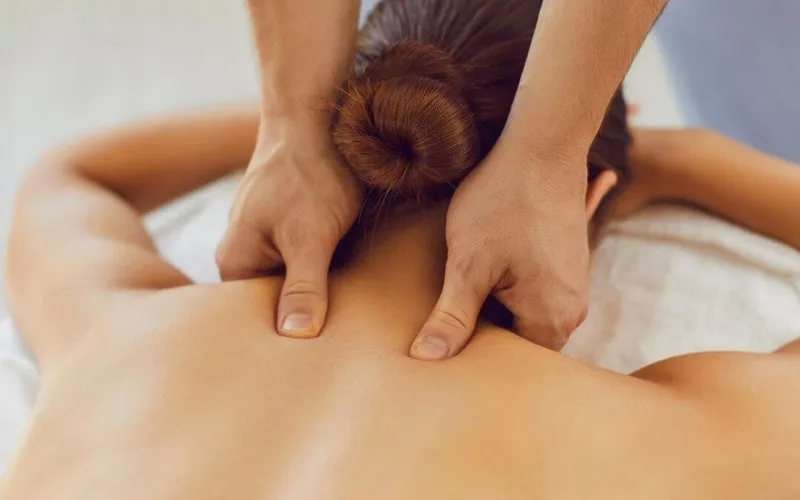
Who Deep Tissue Massage is for
Pick Deep Tissue if you can point to a specific tight zone that has been bothering you for a while — tight upper trap from desk work, ongoing lower-back tightness from driving or standing, tight calf from running, or a knot in the shoulder blade that never loosens. The session focuses firmer focused pressure on these specific areas rather than spreading evenly across the whole body.
Deep Tissue is not the right pick if your goal is gentle relaxation — for that, our Swedish Massage or Relaxation Massage works better. If you want a blend of firm and gentle, try Combination Massage.
What a 60-minute Deep Tissue session covers
The session starts with a brief conversation. Where does it feel tight? How long has it felt that way? What usually triggers it? The therapist designs the work around those answers. Pressure builds gradually with broader strokes warming the tissue first, then transitions to firmer focused work — thumbs, knuckles, forearms, sometimes elbows on larger muscle groups. The pressure should feel like steady pressure, never sharp discomfort. Honest feedback during the session keeps it in the productive range.
30-minute Deep Tissue sessions focus on one specific zone — neck and upper shoulders, lower back, or calves and feet. Faster, more targeted, same firmer pressure as the 60-minute. Best when you have one priority area rather than multiple.
Pricing — honest and flat
$40 for 30 minutes, $60 for 60 minutes. Same flat pricing as all our other services. Cash and major credit cards accepted. Tipping is voluntary.
What to expect when you walk in
Walk in to 688 Hollister St #D, San Diego. Front desk confirms duration and Deep Tissue. You pay up front. Therapist walks you to a private closing-door room with fresh sheets. You undress to your comfort level. Therapist asks where the priority area is, then begins. Session may leave you with mild "good sore" feeling for 12 to 24 hours afterward, which is normal — the body softens the next day. Total visit including check-in is about 75 minutes for a 60-minute Deep Tissue.
Frequently asked
Will Deep Tissue Massage feel too strong?
It should feel firm but manageable, never sharp or overwhelming. If anything ever feels too intense, say so immediately and your therapist will adjust within seconds. Honest feedback keeps the pressure in a comfortable range.
How sore will I be afterward?
Mild "good sore" for 12 to 24 hours is common, similar to a light gym session. By day two most guests feel meaningfully looser than before the session. Drink water, take a warm bath if available, and avoid heavy gym workouts the same day.
Can a 30-minute Deep Tissue session be effective?
Yes for one specific priority area — neck and upper shoulders, lower back, or calves only. The 30-minute Deep Tissue is essentially a focused targeted session on one zone. The 60-minute version allows working two or three priority zones with proper warm-up time.